
Exploring Creativity in the Foundation Program
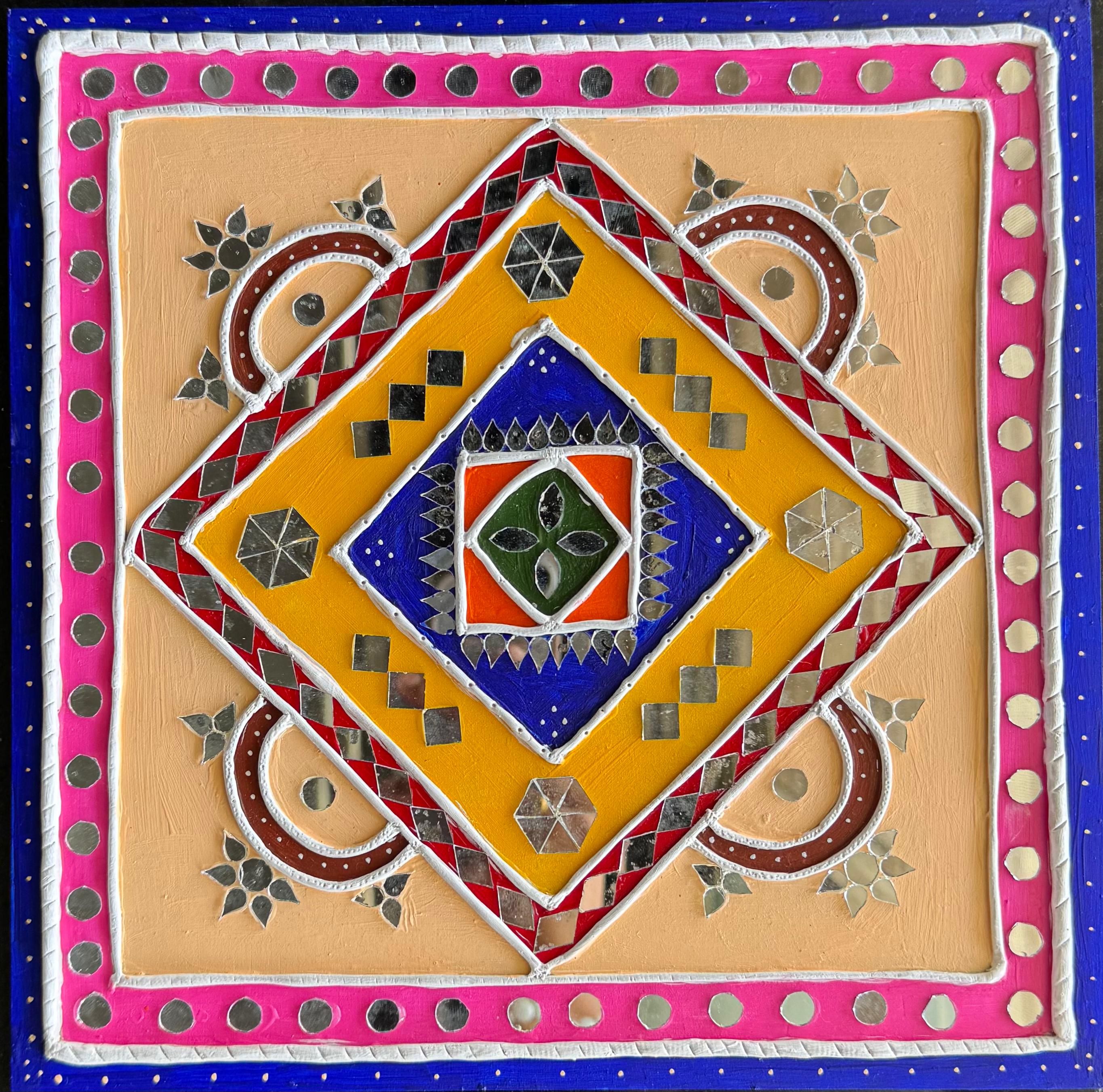
At NIF Global Pimpri Chinchwad, the foundation course encourages students to learn through hands-on practice. As part of this journey, Arnika Ajmera explored not only interior design basics but also a range of creative art forms. Lippan art, rope art, acrylic painting, and other techniques introduced her to textures, patterns, and cultural expressions that broaden her design perspective.
Understanding Color Schemes
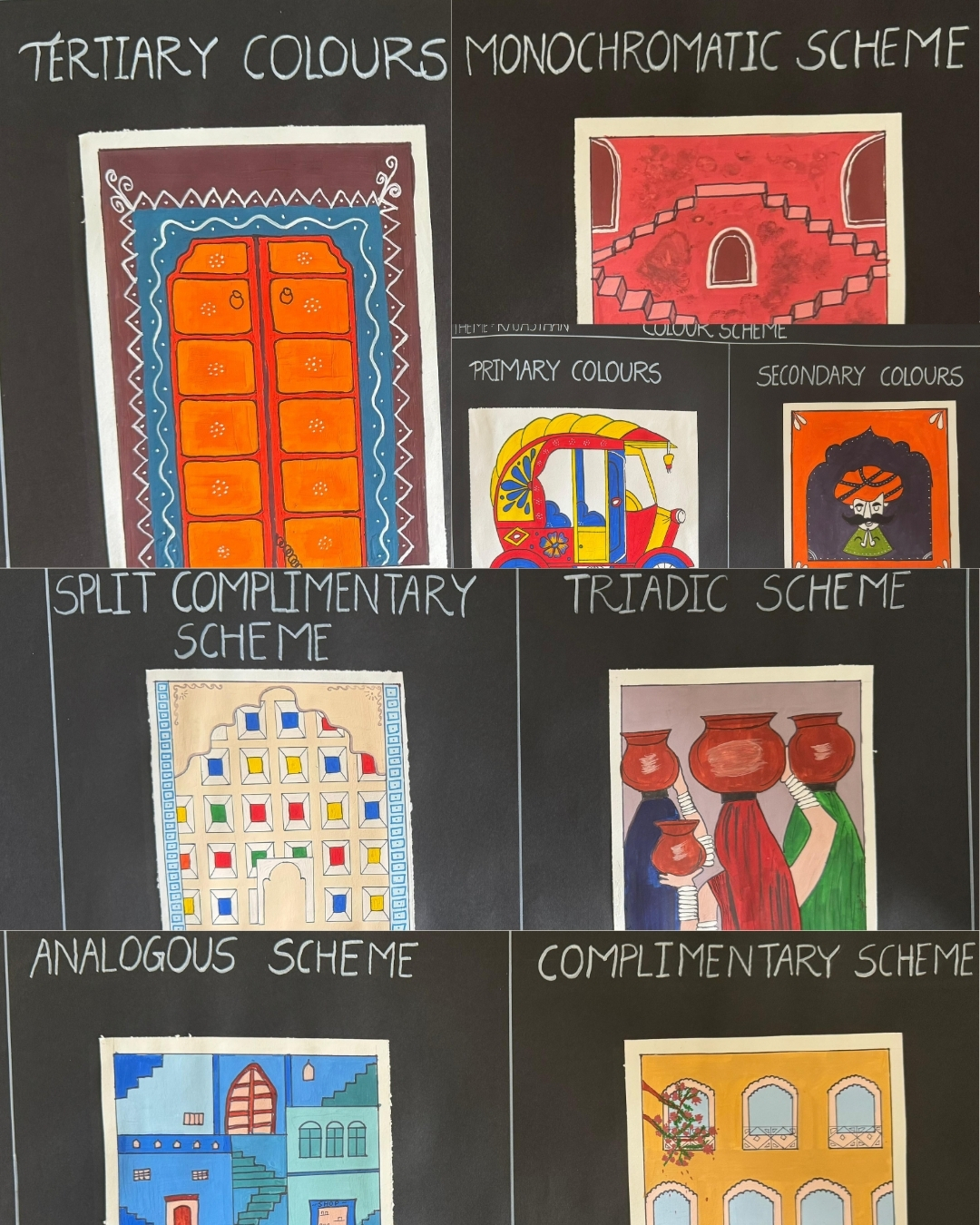
Arnika focused on learning color theory by experimenting with different color combinations. She explored primary colors (Red, Blue, Yellow), secondary colors (Orange, Green, Violet), analogous colors, complementary colors, tertiary colors, monochromatic variations, triadic colors, and split-complementary schemes.
To apply these ideas, she created a theme inspired by Rajasthan. She used the region’s vibrant colors, traditional patterns, and cultural textures. This approach allowed her to connect her theoretical knowledge with actual interior design projects, producing designs that were visually appealing and reflective of Rajasthan’s cultural richness.
Learning Hue, Value, Tint, Tone, and Shade
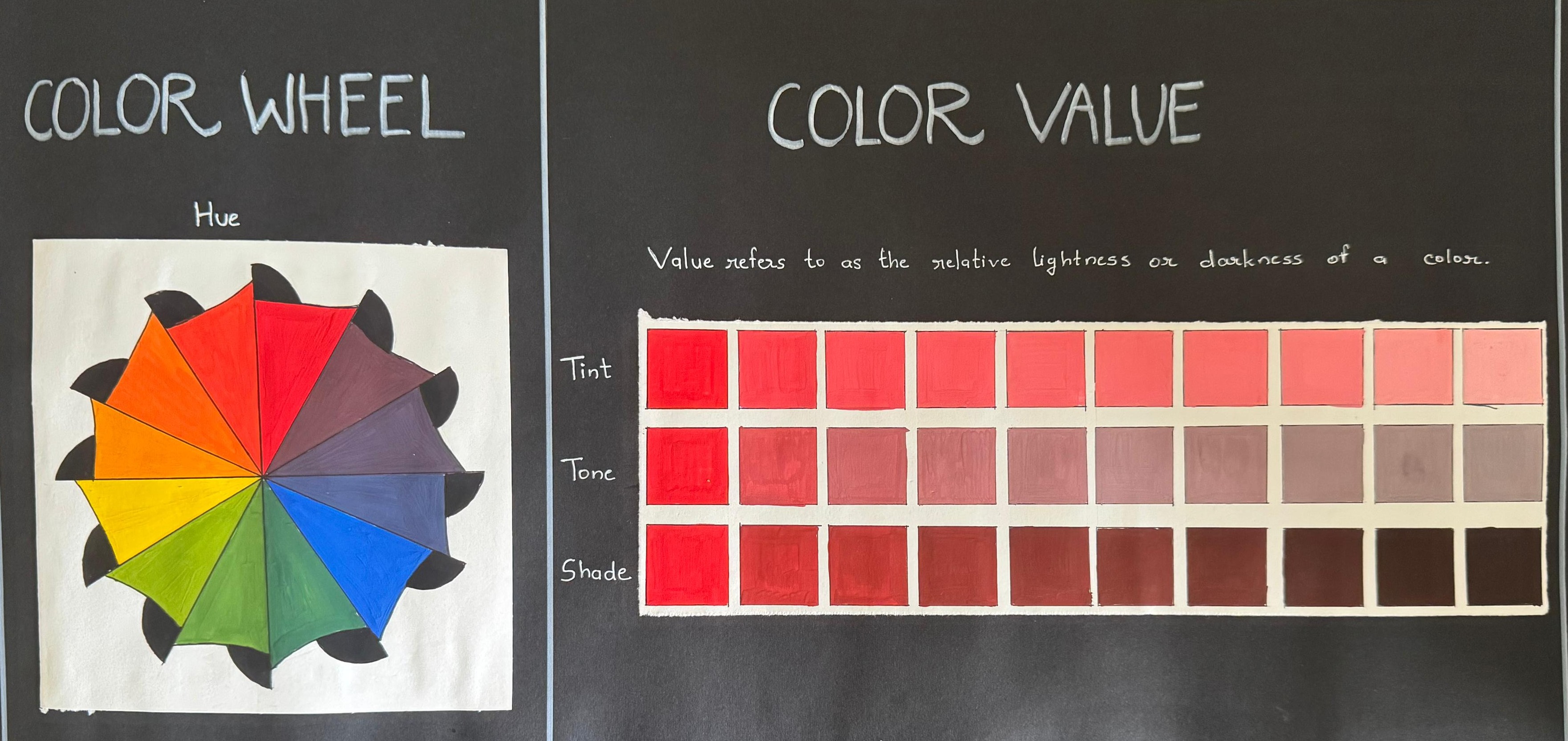
Arnika also explained the essential elements that shape color behavior. Hue reflects the true identity of a color, while value shows how light or dark it appears. Tint softens a color with white, tone ads grey for subtle depth, and shade enriches it with black. These variations guide designers in creating balanced, expressive interiors.
Technical Drawing in Visual Communication
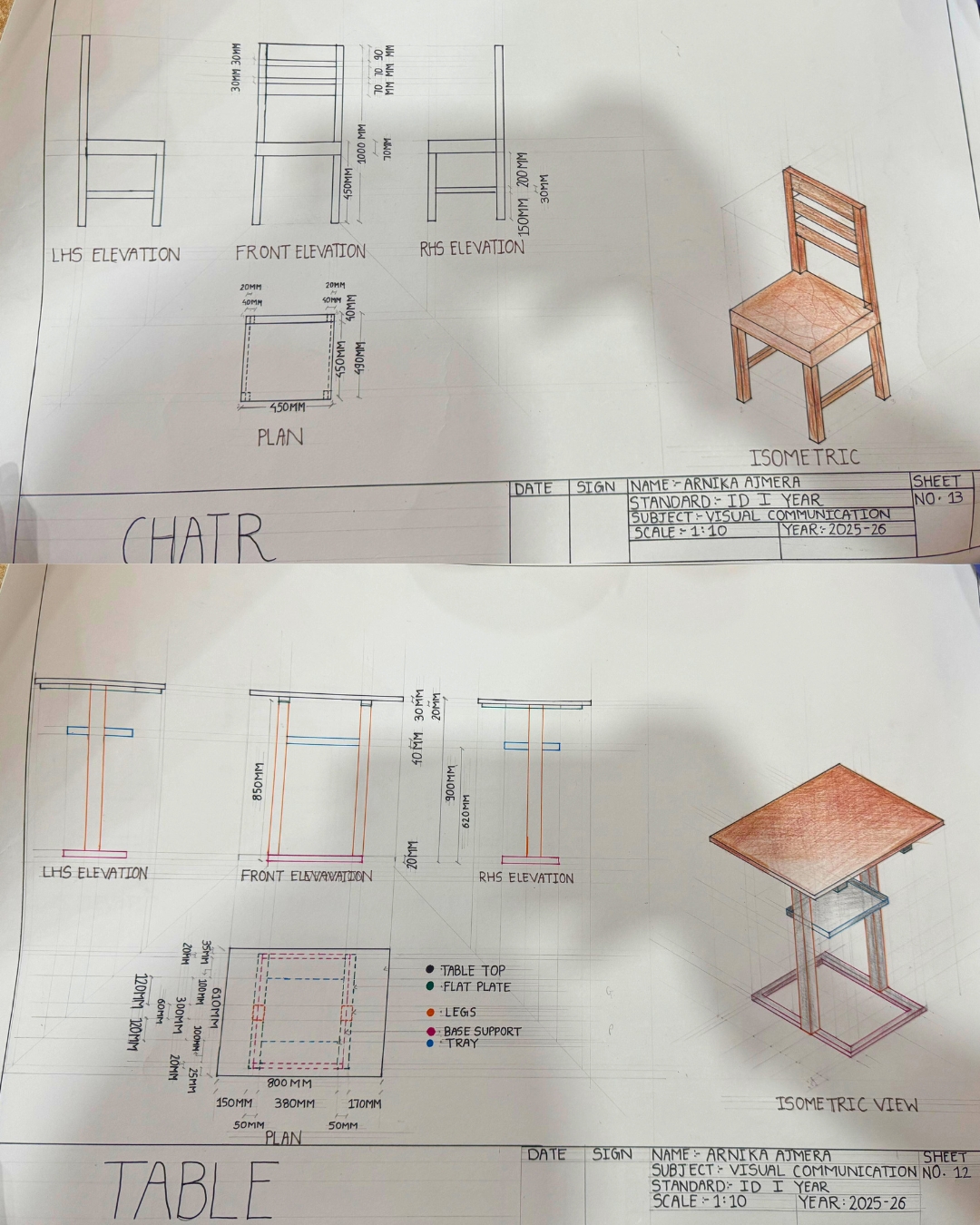
In the Visual Communication subject, Arnika practiced precision through technical drawings. She sketched a chair and a table in both plan and elevation views, including every measurement. This strengthened her understanding of scale, proportion, and how furniture interacts with space.
From Observation to Model Making
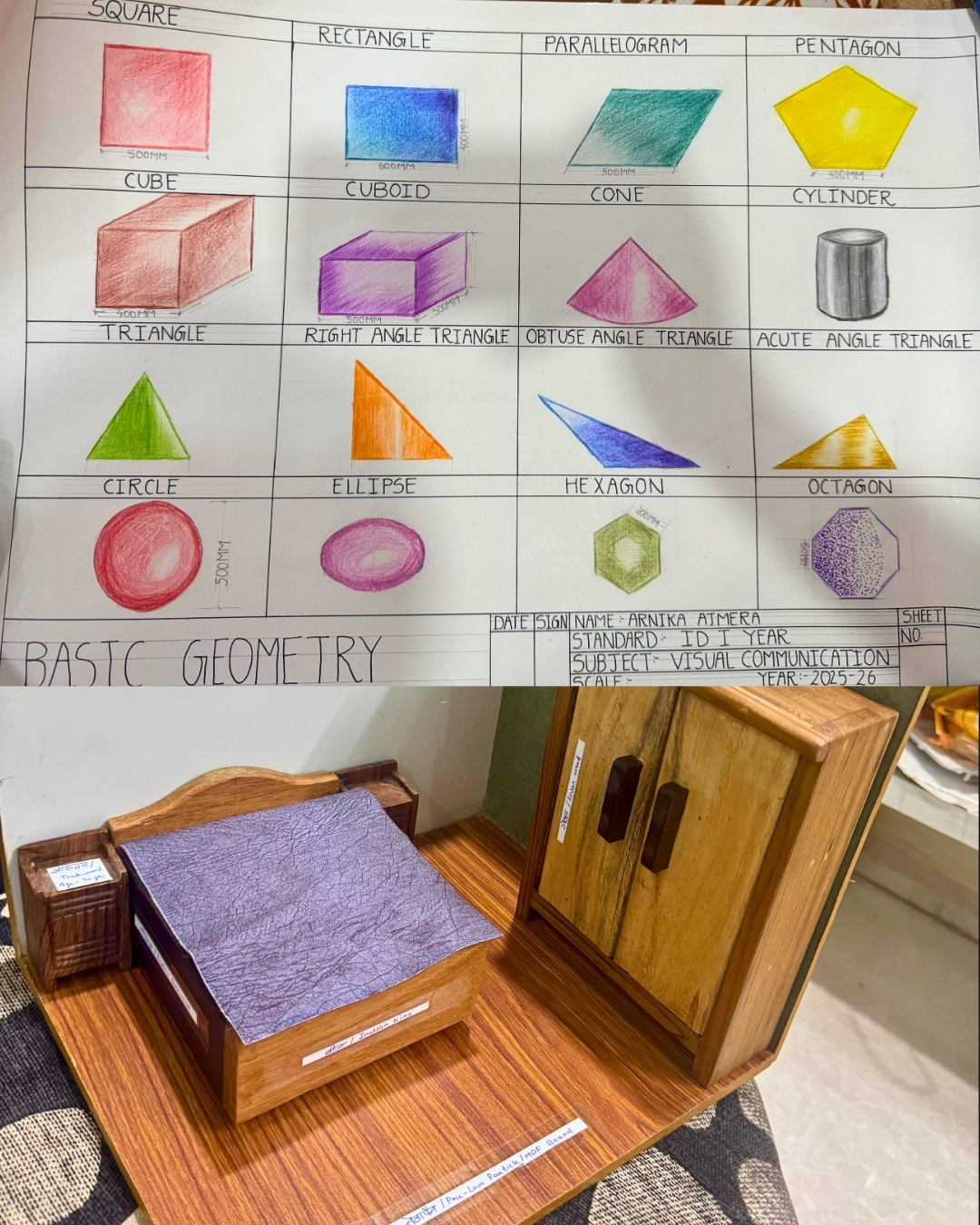
As part of her foundation learning, Arnika explored materials, surface textures, and basic geometric forms to understand how structure shapes the character of a space. Observing triangles, rectangles, cubes, cylinders, and hexagons helped her see how form supports both function and aesthetics. She also studied how lighting alters the perception of materials and colors. Bringing these insights into practice, she built a small room model using a single material: solid wood. She crafted a bed, side table, and wardrobe with careful attention to proportion and utility, translating her ideas into a tangible, thoughtfully designed model.
